Dinner Doesn't Need a Main Course
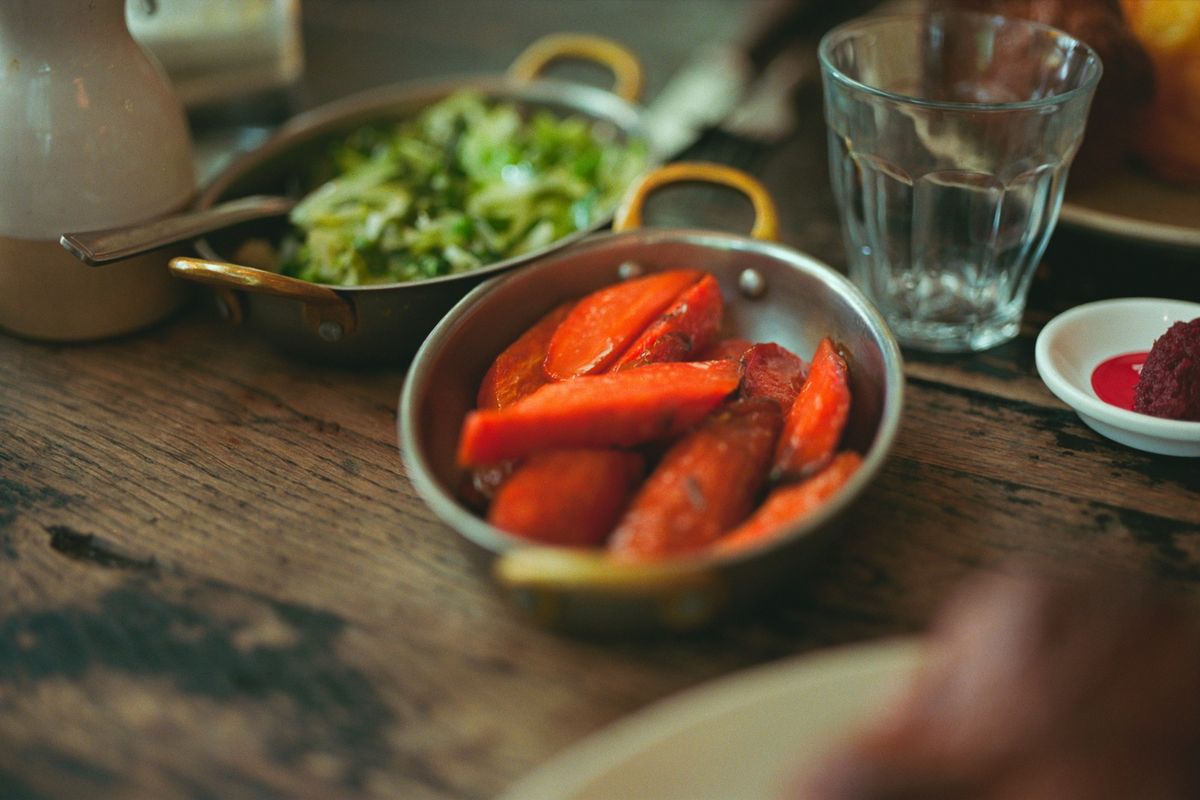
Photo by Intrepid on Unsplash
It is six o'clock. In the fridge there are potatoes you could roast, a bag of green beans, eggs, half a loaf of good bread and a piece of cheese. What there isn't is chicken, because nobody took it out of the freezer this morning. So you stand at the open fridge and think there is nothing for dinner, even though there is plenty to eat.
The problem is not the fridge, and it is not you. It is a rule most of us never chose: that a real dinner has a piece of meat in the middle of the plate, with everything else arranged around it. Drop that rule, and one of the hardest parts of the evening goes with it.
A Rule Nobody Wrote Down
In the early 1970s, the anthropologist Mary Douglas suggested to one of her students in London, Michael Nicod, that he study "the rules governing food in working-class London families." Nobody in those homes had written the rules down, but everyone followed them. "He found a strongly rule-bound system," Douglas wrote years later. A meal did not count as dinner unless it had potatoes, for example. The ideal meal began with "gravy over meat and potatoes (on one big plate)."
The details change from home to home, but most of us carry some version of that rule. Ashlie D. Stevens, the senior food editor at Salon, described hers in February 2026. She felt she should make a "real" dinner, which to her meant "a visible protein anchoring the plate." As she put it, "It's a lot to carry into 6 p.m."
It is a lot, because the main is the hardest part of the meal. It is the thing that has to be thawed in the morning or bought on the way home. It has to be timed to the minute and cooked just right, and it costs the most to get wrong. Sides are more forgiving. A tray of potatoes can stay in the oven ten more minutes. A salad doesn't mind what time you eat.
What Dinner Really Looks Like
The rule is strong, but it doesn't describe how most people eat. The US Department of Agriculture tracks what Americans eat at each meal through a national dietary survey. Its April 2024 report on dinner draws on interviews with 7,707 adults between 2017 and March 2020. Two-thirds of the adults who ate dinner had what the survey calls a mixed dish: a sandwich or burger, a pasta or rice dish, tacos, pizza or soup. About a third, 35%, had a protein food on its own, such as a piece of chicken, meat or fish.
So the plate with meat in the middle is mostly a picture in our heads. On real weeknights, many dinners are one thing in a bowl or between two slices of bread. Yet when the evening goes wrong, we judge ourselves against a plate that most dinners don't look like.
The Part People Love
Ask people what they enjoy, and the sides win. Each year Campbell's surveys Americans about Thanksgiving, the meal built most firmly around one big dish in the middle. In its 2025 survey of 5,000 US adults who celebrate the holiday, 63% said they prefer the side dishes to the turkey. Nearly half, 47%, said they would be perfectly happy with a plate full of sides and nothing else, up from 38% the year before.
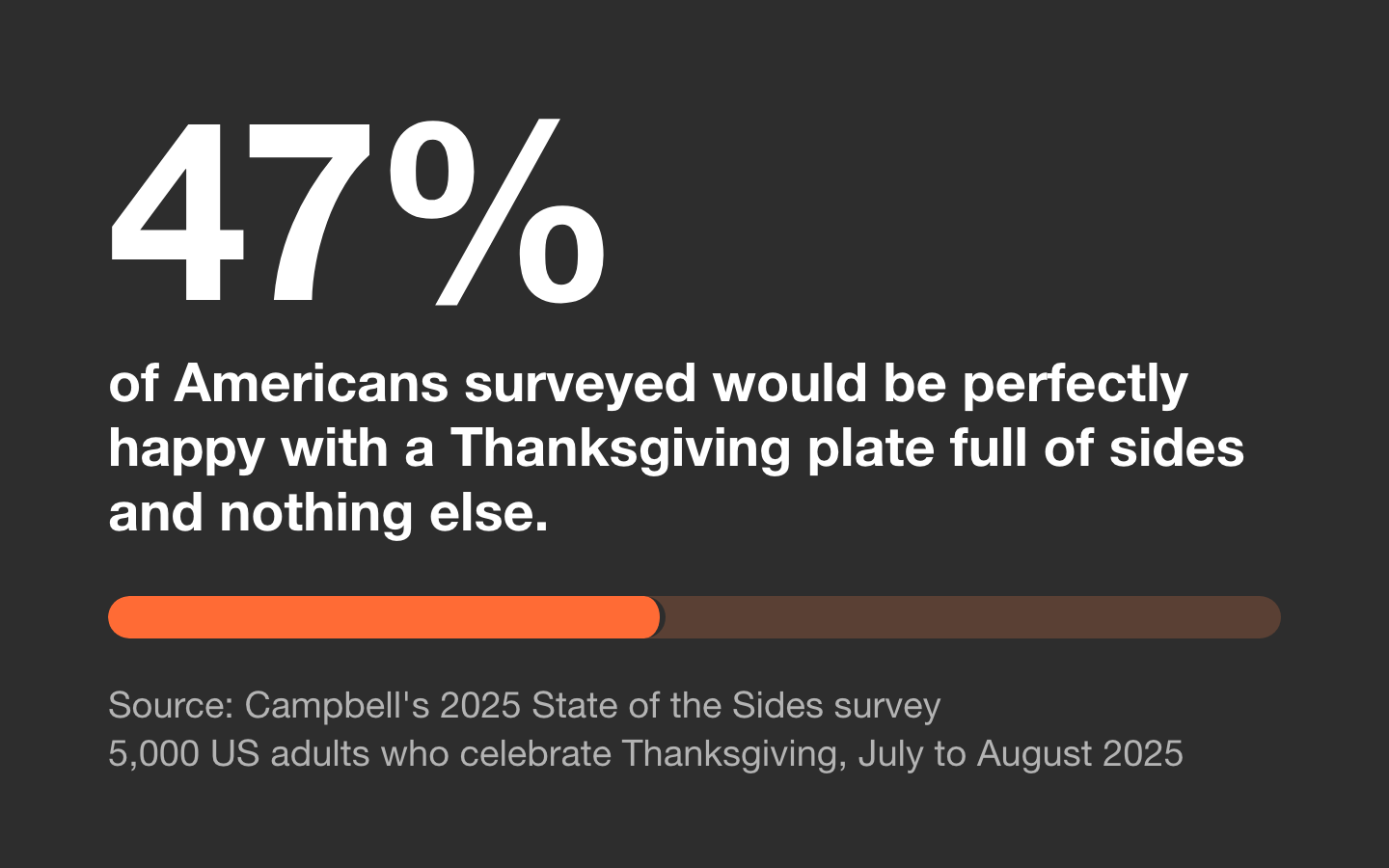
Campbell's sells soups that go into side dishes, so it has its own reasons to cheer for them. But the result matches what many cooks see every November. Even on the biggest food holiday of the year, the dish in the middle is not what most people come for.
Stevens makes the same point. An all-sides meal, she wrote, "isn't a cop-out; it's a template. A generous one."
Dinner Without a Middle
A dinner of sides is not half a dinner. Roasted potatoes, green beans, a couple of eggs, bread and cheese make a full meal. There is something filling, something fresh, and enough on the table for everyone to take what they like. What is missing is only the one dish that had to be planned, thawed, timed and judged.
Plenty of good music has no singer, and nobody calls it unfinished. Dinner works the same way. It doesn't need one dish to be the star.
Like cooking the same meals again, a dinner of sides is a choice that makes the evening easier, not a sign that you have given up. It also makes the question of what's for dinner a little smaller, because you no longer have to start with the main.
So the next time you open the fridge and see no main, look again at what is there. If it can feed everyone at the table, it is dinner. Nothing is missing. You have just stopped following a rule you never chose.
Want a voice to talk you through each recipe while your hands are busy? Learn more at ChefTalk.
At ChefTalk, we're building a voice-first cooking companion that transforms any recipe into hands-free guidance, action by action. Learn more.
Sources
- Campbell's (2025). Campbell's Declares It's Officially Sides Season with 2025 State of the Sides Report. Press release, November 6, 2025. Survey of 5,000 US adults who celebrate Thanksgiving, by Reputation Leaders, July to August 2025.
- Sebastian, R. S., Hoy, M. K., Murayi, T., Goldman, J. D., & Moshfegh, A. J. (2024). Dinner Consumption by U.S. Adults: What We Eat in America, NHANES 2017-March 2020. USDA Food Surveys Research Group, Dietary Data Brief No. 55.
- Douglas, M. (1997). A course off the menu. Times Higher Education, August 22, 1997.
- Stevens, A. D. (2026). Why sides make the best dinner. Salon, February 12, 2026.