Susan McLellan Plaisted's Heart to Hearth Cookery: Colonial Recipes Tested by Hand
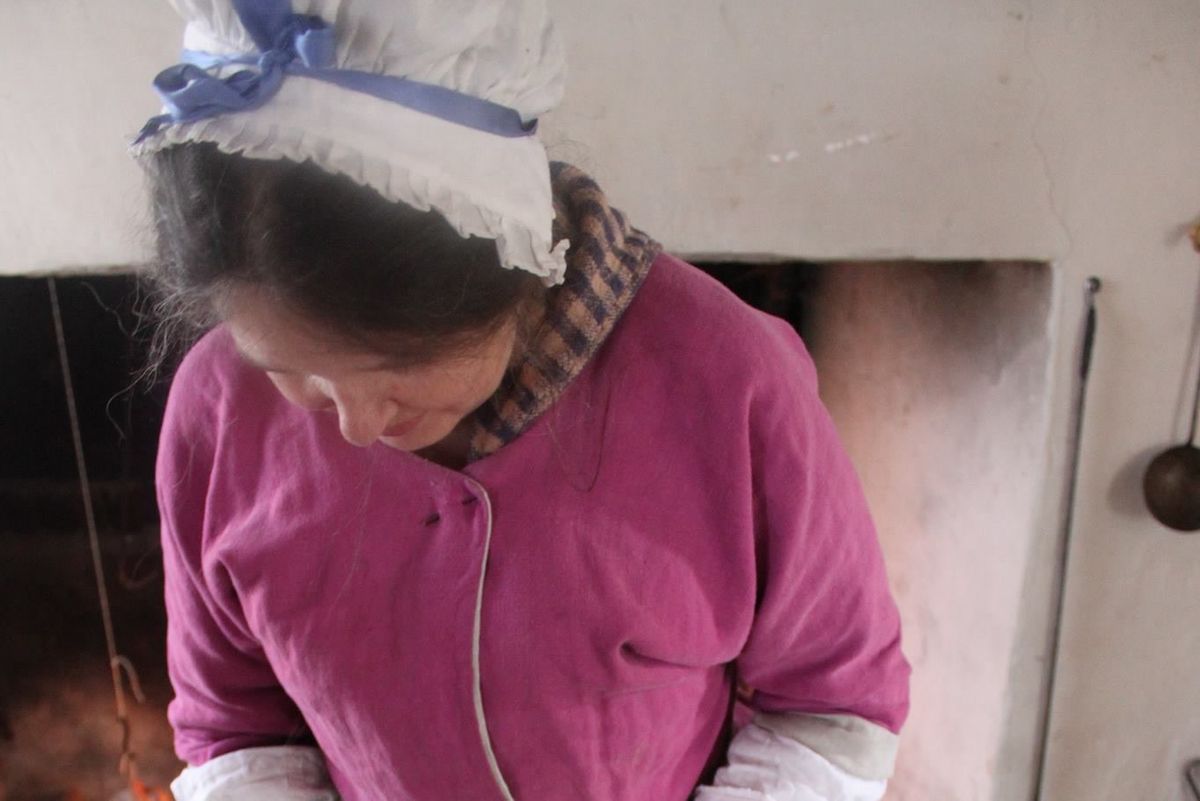
Susan McLellan Plaisted, the food historian behind Heart to Hearth Cookery, at the hearth in period dress. Photo © Susan McLellan Plaisted, courtesy of hearttohearthcookery.com
Heart to Hearth Cookery Recipes from the 1600s and 1700s, cooked by hand one step at a time hearttohearthcookery.com

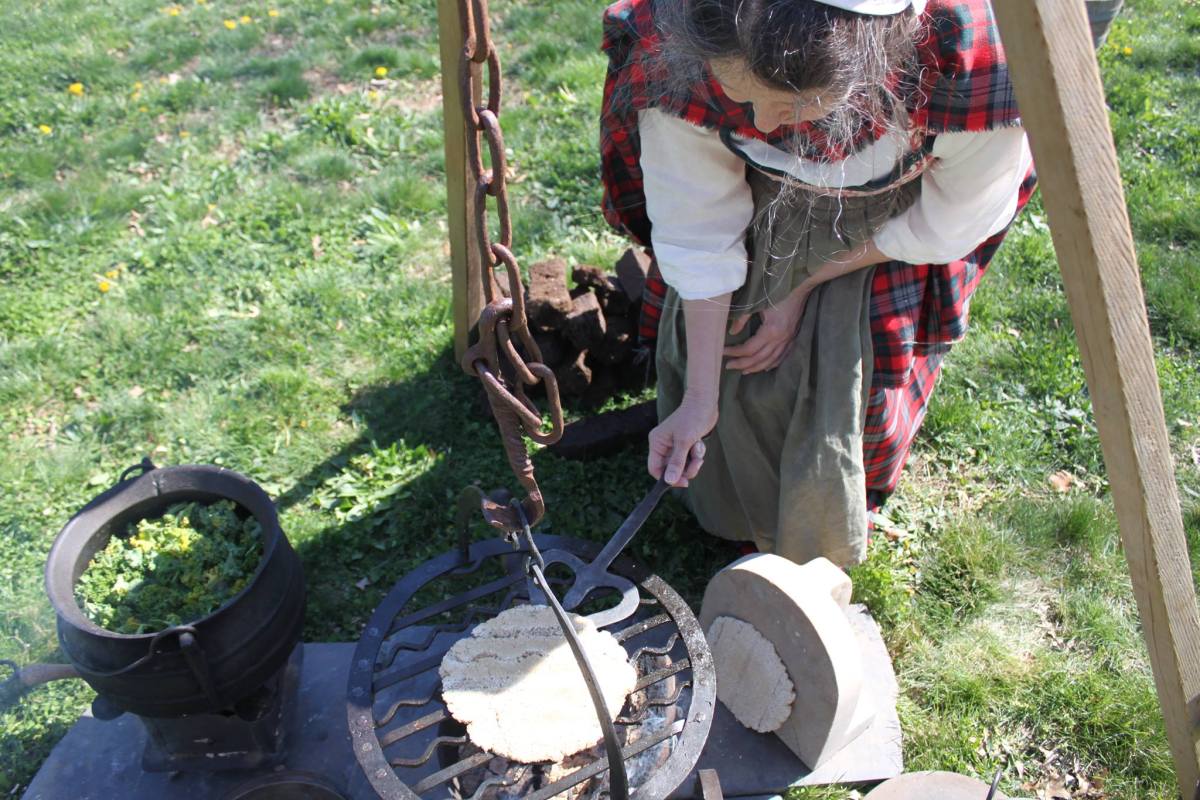
In 1685, an English cookbook told its readers to take bisket bread "beaten to powder" for a batch of cheese fritters. When Susan McLellan Plaisted followed that instruction in August 2026, it did not work. Her bisket bread would not pound down into a powder, so she grated it instead, took a photo, and wrote down what she had found. That small note is the whole idea of her blog.
Plaisted runs Heart to Hearth Cookery, a food history business in Bucks County, Pennsylvania. She teaches hearth cooking classes at Bolton Mansion in Levittown, and she coordinates the third Sunday foodways programs at Pennsbury Manor, the re-created 1680s home of William Penn. Her demonstrations cover cooking from the 1600s to the 1800s, along with Native American foodways from before and after European contact. Her blog, which she also calls Bites of Food History, has been running since April 2009 and now holds more than 2,600 entries.
Its tagline reads "Sharing my Experimental Archaeology of Food." Experimental archaeology means testing ideas about the past by doing what people did, with the tools they had. For Plaisted, the evidence is the receipt, the old word for a recipe, and the test is cooking it.
Colonial Hearth Cooking, One Step at a Time
Most food blogs give you a whole recipe in one post. Plaisted spreads one recipe across eight to sixteen posts. Each post is a single photograph with a sentence or two. A series usually opens with the work table and the ingredients laid out, follows each instruction in the order the old text gives it, and often ends with the full receipt in its original wording. Her autumn of 2026 shows the pattern. A 1747 recipe for stewed cucumbers took ten posts. A 17th-century recipe for cinnamon biscuits ran from October 11 to November 9.
The captions are where the testing shows. Old recipes leave out what every cook of the time already knew, and she says so when she fills a gap. Stoning cherries for a 1702 manuscript recipe, she found that the best tool was not a knife but the end of a larding needle. Drying those cherries in the sun "took much longer than I expected." For a pudding she started in November, she blanches the almonds before beating them, because that step "would have been known" to the cook and so the recipe leaves it out. She often makes a third or a quarter of a recipe, weighing the sugar on balance scales.
That puts her in good company in this series. Marissa Nicosia of Cooking in the Archives cooks handwritten recipes from 1600 to 1800 and reports honestly on what goes wrong. Carolyn Ekins of The 1940s Experiment has been cooking through Britain's wartime ration recipes since 2009, the same year Plaisted started her blog. What Plaisted adds is the equipment. She works with the tools the recipes expected: a marble mortar and pestle, balance scales, a sieve, and a bake oven with drying racks.
Two Pieces Worth Exploring
Fritters in the Italian Fashion
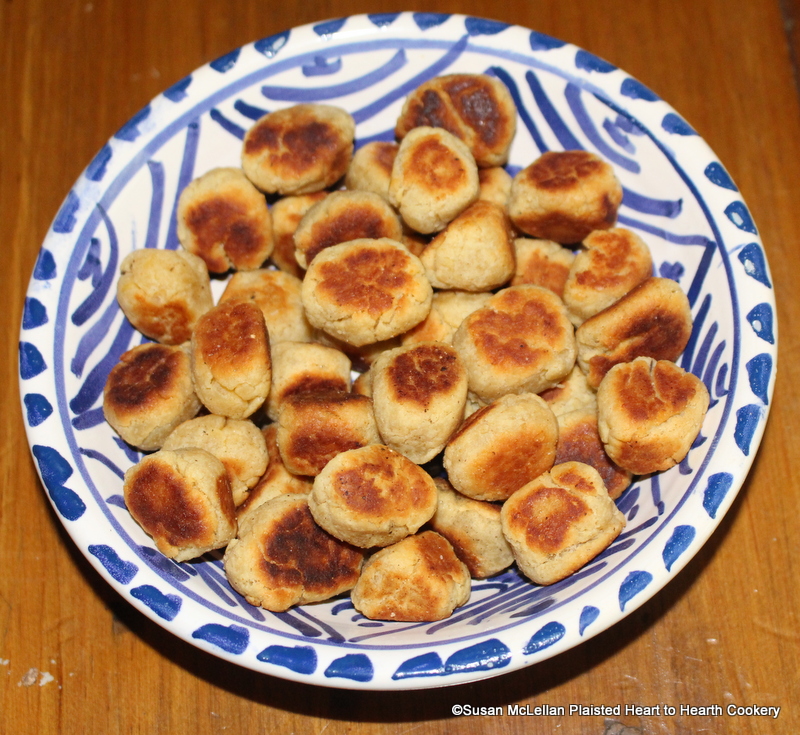
Fritters in the Italian Fashion Parmesan fritters from a 1685 cookbook, made in a marble mortar over thirteen posts hearttohearthcookery.com
Her parmesan fritters come from the 1685 edition of Robert May's The Accomplisht Cook. It calls for a pound of grated parmesan, a pint of flour, as much bisket bread "beaten to powder," four or five egg yolks, saffron, rose water, sugar, cloves, mace and cream. The mixture is made into a stiff paste, rolled into balls "as big as a nutmeg or musket bullet," and fried in clarified butter. Plaisted made the whole thing in a green marble mortar, as May suggests, and steeped the saffron in the cream and rose water before adding it. The thirteen posts, from August 11 to September 3, record what the text did not prepare her for: the bread that had to be grated, and the small balls that were hard to turn in the butter so they cooked evenly. Start with the last post for the full recipe, then read back through the steps.
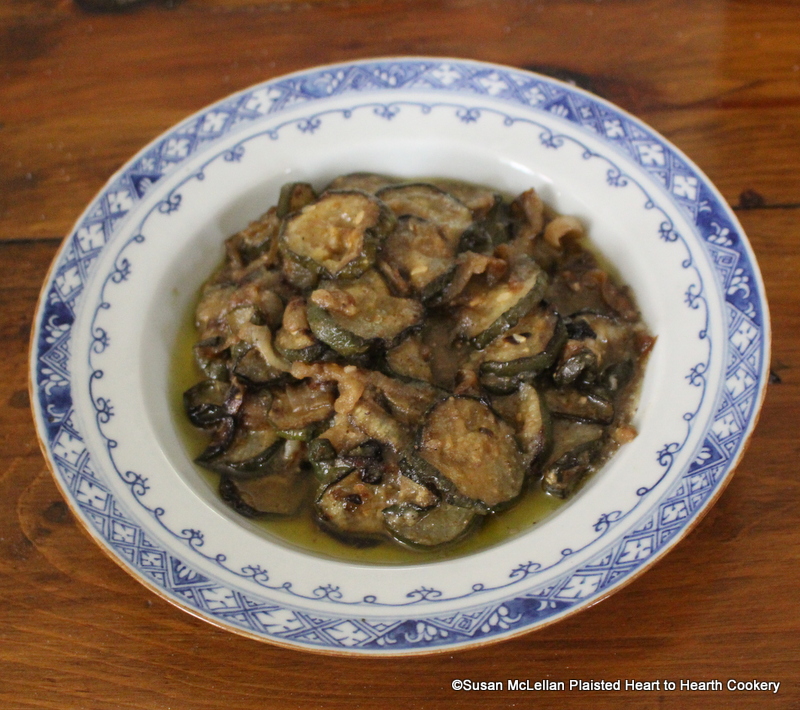
To stew Cucumbers Hannah Glasse's 1747 side dish of browned cucumbers and onions, followed to the letter hearttohearthcookery.com
Her stewed cucumbers are a dish you could cook tonight. The recipe comes from Hannah Glasse's The Art of Cookery Made Plain and Easy, first published in 1747. Six large cucumbers and six large onions are sliced, fried brown and drained. Then they are stewed for a quarter of an hour with three spoonfuls of hot water, a quarter pound of butter rolled in flour, a teaspoon of mustard, and pepper and salt. Plaisted reads the recipe closely. It tells you to peel the onions but says nothing about peeling the cucumbers, so she left the peel on. Where it calls for mustard, she made her own by grinding mustard seed with white wine vinegar. It takes ten short posts, from September 21 to October 9, and the dish at the end needs nothing a modern kitchen does not have.
Why It Matters
Old recipes are easy to admire and hard to use. They leave out quantities, temperatures and whole steps, because they were written for cooks who already knew them. Plaisted does not rewrite them as modern recipes. She does something more useful for anyone curious about how people cooked: she follows the words exactly, shows every step, and tells you where the words were not enough. Her cinnamon biscuits, from a 17th-century manuscript, end with the slices left overnight in a bake oven that was cooling down after a day of baking. "When I opened the oven door, every slice was perfectly dried." Watching that happen teaches you what the recipe means by a "very slack oven" better than any definition could.
The blog rests on decades of work. Her chapter "Baking in a Beehive Oven" appears in Over a Red-hot Stove, a 2009 collection of essays on early cooking equipment, edited by Ivan Day for the Leeds Symposium on Food History. She also contributed to the Oxford Encyclopedia of Food and Drink in America. Her interest started long before any of that. She told County Lines Magazine that it began in Maine, with a father who wanted to visit the homes of all the United States presidents and a nana in South Windham "who taught me essentially all my housewifery skills prior to the age of 10." More than 2,600 posts later, she is still at the hearth, one step and one photograph at a time.
Sources
- About Susan, Heart to Hearth Cookery
- Brandywine Stories: Hearth to Hearth, County Lines Magazine, December 2025
- Over a Red-hot Stove: Essays in Early Cooking Technology, edited by Ivan Day, Prospect Books, 2009
- The Accomplisht Cook, Robert May, 1685 edition, Project Gutenberg
Explore Heart to Hearth Cookery: https://hearttohearthcookery.com
We're featuring exceptional food blogs that bring unique perspectives to cooking and culture. At ChefTalk, we're building a voice-first cooking companion that transforms any recipe into hands-free guidance, action by action. Learn more.