Why Recipes Always Take Longer Than They Say
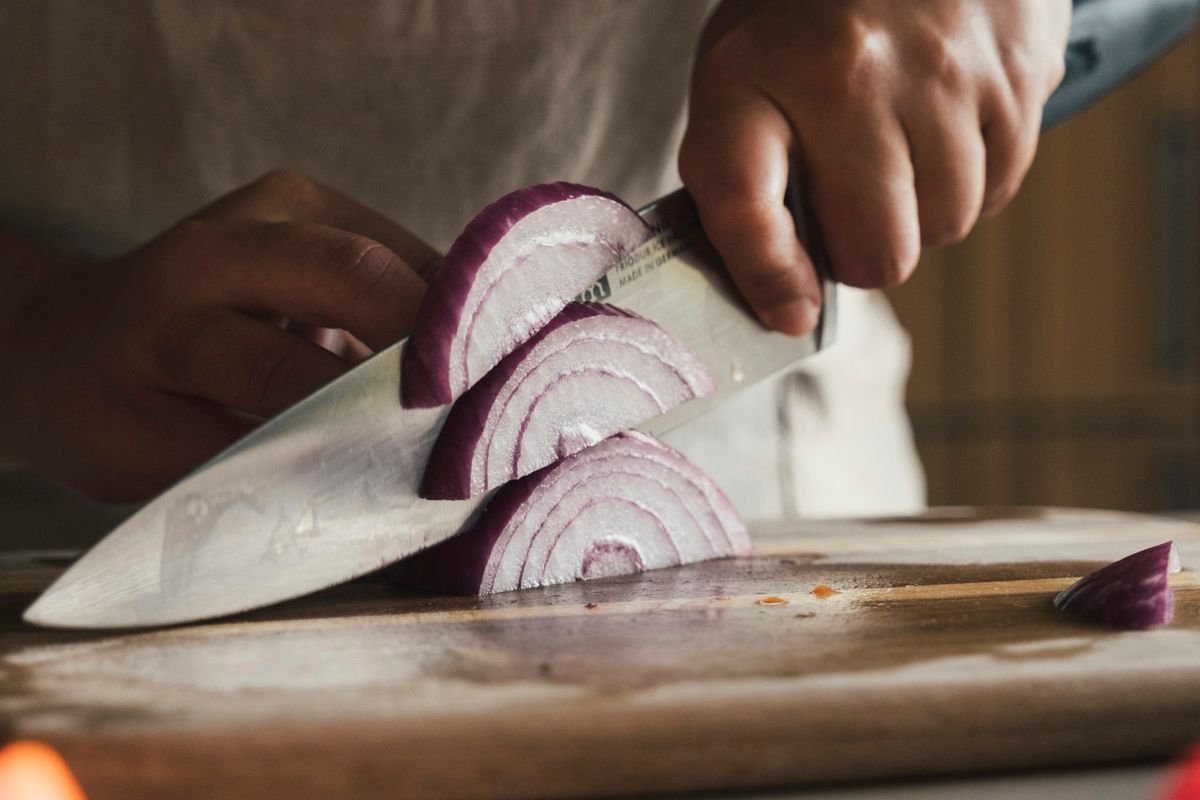
Photo by Ahmet Koç on Unsplash
The recipe said 30 minutes. You are 40 minutes in, the onions are still pale, the rice has not gone on yet, and the counter is covered in peelings. Somewhere between the second onion and the garlic, you start to wonder what is wrong with you.
Nothing is. The time printed on a recipe is not a measure of how long the dish takes. It is a guess, made by someone faster than you, in a kitchen set up better than yours, and it often leaves out the slowest part. When you run over, the number was wrong, not you.
A Common Complaint
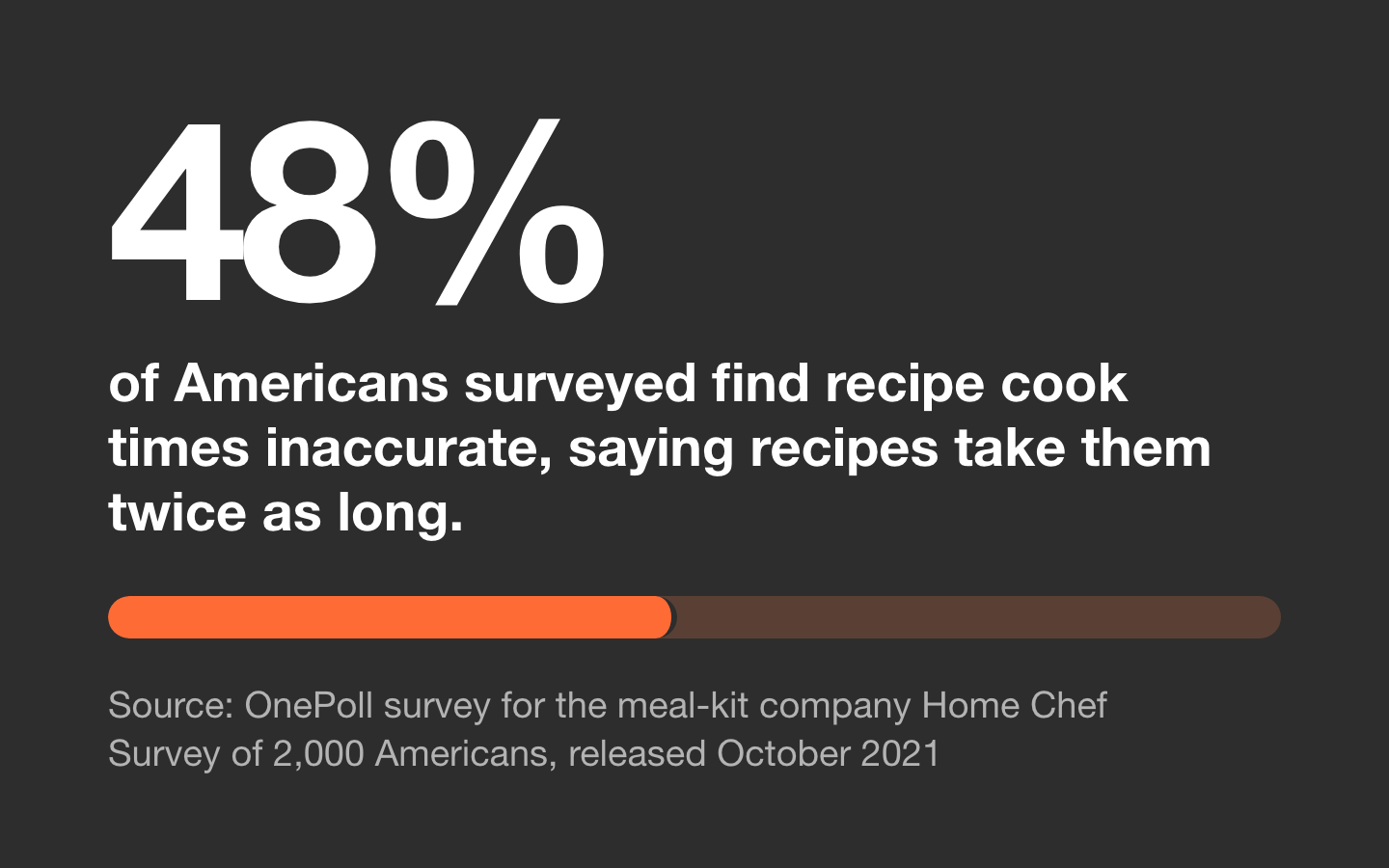
If recipes keep running long for you, you have a lot of company. In a 2021 survey of 2,000 Americans, run by OnePoll for the meal-kit company Home Chef, 48% said recipe cook times are inaccurate, and that recipes take them twice as long as they say. A meal-kit company has its own reasons to talk about lost time, but the complaint will not surprise anyone who publishes recipes. Southern Living's test kitchen says that, more often than not, reader comments are not about a recipe failing. They are about how long it took.
Part of the reason is that the number has no agreed meaning. "There are no hard-and-fast rules for recipe bloggers or cookbook authors to follow," the cookbook author Kat Lieu wrote in Tasting Table last year. Some writers count the chopping and measuring. Some leave prep out of the total altogether, as Southern Living's own older recipes did. A line in the ingredient list such as "butter, softened" can hide ten minutes of waiting that no clock includes. Lieu notes that one oven takes 30 minutes to heat up and another takes 10. Two recipes can both print "30 minutes" and mean two very different evenings.
The Onions Always Take Longer
The slowest step is often the one that gets cut the most. In 2012 the Slate writer Tom Scocca gathered the onion instructions he had been reading for years. The Boston Globe said to cook them "for 5 minutes or until golden." The Washington Post allowed 8 to 10 minutes. Then he tried a quick method that promised browned onions in about 10 minutes. At 10 minutes his onion was soft and pale, with only a hint of gold. It was properly browned at 28.
Scocca's point was not that one writer made a mistake. Browning onions is slow, and it usually comes first, so an honest number would push back the whole recipe. Telling the truth, he wrote, "would turn a lot of dinner-in-half-an-hour recipes into dinner-in-a-little-over-an-hour recipes."
Written by the Fastest Cook in the Room
Then there is the person holding the timer. Recipe developers and testers cook for a living. They have chopped thousands of onions, they know where every tool is, and nobody asks them for a snack halfway through. Psychology has studied what happens when experts guess how long a task will take someone newer to it. In a 1999 study, the researcher Pamela Hinds asked experts, intermediate users and beginners to predict how long beginners would need to finish a complex task. The more expertise people had, the worse their guesses were. The experts kept guessing too low even when the researchers tried methods meant to correct them. Being good at something makes it harder, not easier, to see how long it takes everyone else.
Careful test kitchens know this. Southern Living's team says it pads its times "for home cooks moving a little slower than we do." Even so, its recipe developer Nicole Hopper says a published time "is never going to be 100 percent accurate for every single person." Her colleague Tricia Manzanero Stuedeman adds that no recipe time allows for a slow stove, a phone call, or "herding beloved pets back out of the kitchen." Real kitchens have all of these.
It is the same gap that sits behind season to taste, which assumes you already know what the dish should taste like. The time on a recipe assumes you already cook like the person who wrote it. It is also a smaller version of the problem behind the recipe that failed you. There, nobody had cooked the recipe at all. Here, someone did, but at their speed, not yours.
Your Kitchen, Your Time
So read the number for what it is: the writer's time, in the writer's kitchen. It works like the walking time on a trail sign, measured by someone who knows the trail, carries less and never stops to rest. It can still help you plan. It cannot tell you whether you are slow.
The time a dish takes you, with your knife, your stove and whoever is pulling at your sleeve, is the real time for your kitchen. That is the number that matters on a weeknight, when what's for dinner is already a hard enough question. And it usually gets shorter the more often you make the same dish.
Hopper put it plainly: "It doesn't mean that you've failed if a recipe takes you longer than what it says!" That comes from a test kitchen. You can believe it.
Want to cook a recipe at your own pace? Learn more at ChefTalk.
At ChefTalk, we're building a voice-first cooking companion that transforms any recipe into hands-free guidance, action by action. Learn more.
Sources
- Home Chef and OnePoll (2021). People engulfed by cooking fatigue after drive to prep meals dried up during pandemic. SWNS, October 26, 2021. Survey of 2,000 U.S. adults.
- Al-Hatlani, A. (2025). Here's Why Recipe Times Never Seem Accurate. Southern Living, May 11, 2025.
- Lieu, K. (2025). Why Recipe Blogs Always Seem To Lie About Times. Tasting Table, October 5, 2025.
- Scocca, T. (2012). How to cook onions: Why recipe writers lie and lie about how long they take to caramelize. Slate, May 2, 2012.
- Hinds, P. J. (1999). The curse of expertise: The effects of expertise and debiasing methods on prediction of novice performance. Journal of Experimental Psychology: Applied, 5(2), 205-221.