Zerrin and Yusuf Gunaydin's Give Recipe: Turkish Home Cooking, From Tarsus to Manchester

Zerrin and Yusuf Gunaydin, the Turkish couple behind Give Recipe. Photo courtesy of giverecipe.com
Give Recipe Turkish home cooking beyond kebabs and baklava, from a Turkish couple in Manchester giverecipe.com
Every time Zerrin and Yusuf Gunaydin share their classic piyaz on Instagram or Facebook, someone from Antalya writes in to say it isn't piyaz at all. In most of Türkiye, piyaz is a simple white bean salad with onions, tomatoes and sumac. In Antalya, on the southern coast, the beans are served in a generous pool of tahini sauce, and the traditional beans are a local variety called Çandır. So in October the couple posted the Antalya version too, with a note to the city: "this recipe is for you, Antalya!"
That is how Give Recipe works. The couple started the blog in 2009, and its archive now holds more than 500 posts. They describe it as a celebration of Turkish cuisine, with recipes "that go beyond the well-known Turkish kebabs and baklava." Where a dish changes from one town to the next, they tell you which version you are making and where it comes from.
Zerrin taught English at Anadolu University in Türkiye before she switched to blogging full time in 2018. She learned to cook from her mother. Both she and Yusuf had grandparents in villages in different parts of Türkiye, where cooking over a wood fire was part of everyday life. Yusuf is a professional food photographer who has taken the blog's pictures from the start and also works with food brands in the UK. After nearly four decades in Türkiye, the couple moved to the UK. They live in Manchester with their son, who takes Turkish food to school in his lunch box: lentil balls, soft pastries called poğaça, and kısır, a bulgur salad.
Regional Turkish Recipes That Name Their Town
Zerrin grew up in Tarsus, a city in the Mersin region of southern Türkiye, and her hometown comes up again and again on the blog. In Tarsus, they explain, when people say kebab they usually mean what most people know as Adana kebab. Lentil balls, mercimek köftesi, are almost never served there without sumac onions on the side. Lemon is one of the most common ice cream flavors in town, and as a child Zerrin bought one scoop of lemon and one of plain from the neighborhood vendor every day in summer. Her grandmother cooked with sumac because lemons were hard to find in her day, and boiled the berries into a sour sauce.
They give the same detail for other parts of the country. Tarhana, a dried soup base, takes a different name in each region that makes it. Ali Nazik, roasted eggplant mixed with thick yogurt and topped with lamb, is from Gaziantep. The couple are just as clear about what is hard to find in the UK. When they first moved, they asked a butcher for lamb tail fat, a common kebab ingredient in Türkiye, and he had no idea what they meant. Later, on a trip to the countryside, they noticed how small the tails are on lambs in the UK. When they finally found the fat at a Middle Eastern market, they wrote, it felt "like we had found a hidden treasure."
Like Shihoko Ura of Chopstick Chronicles, who rebuilt her grandmother's Wakayama cooking in Brisbane without the greens it called for, they cook the food of one place while living in another. And they say clearly when they swap an ingredient. And like Heifa Odeh of Fufu's Kitchen, who insisted on writing a Palestinian cookbook rather than a Middle Eastern one, they would rather say exactly where a dish comes from than simply call it Turkish.
Two Pieces Worth Exploring
Biberli Ekmek (Turkish Pepper Bread)
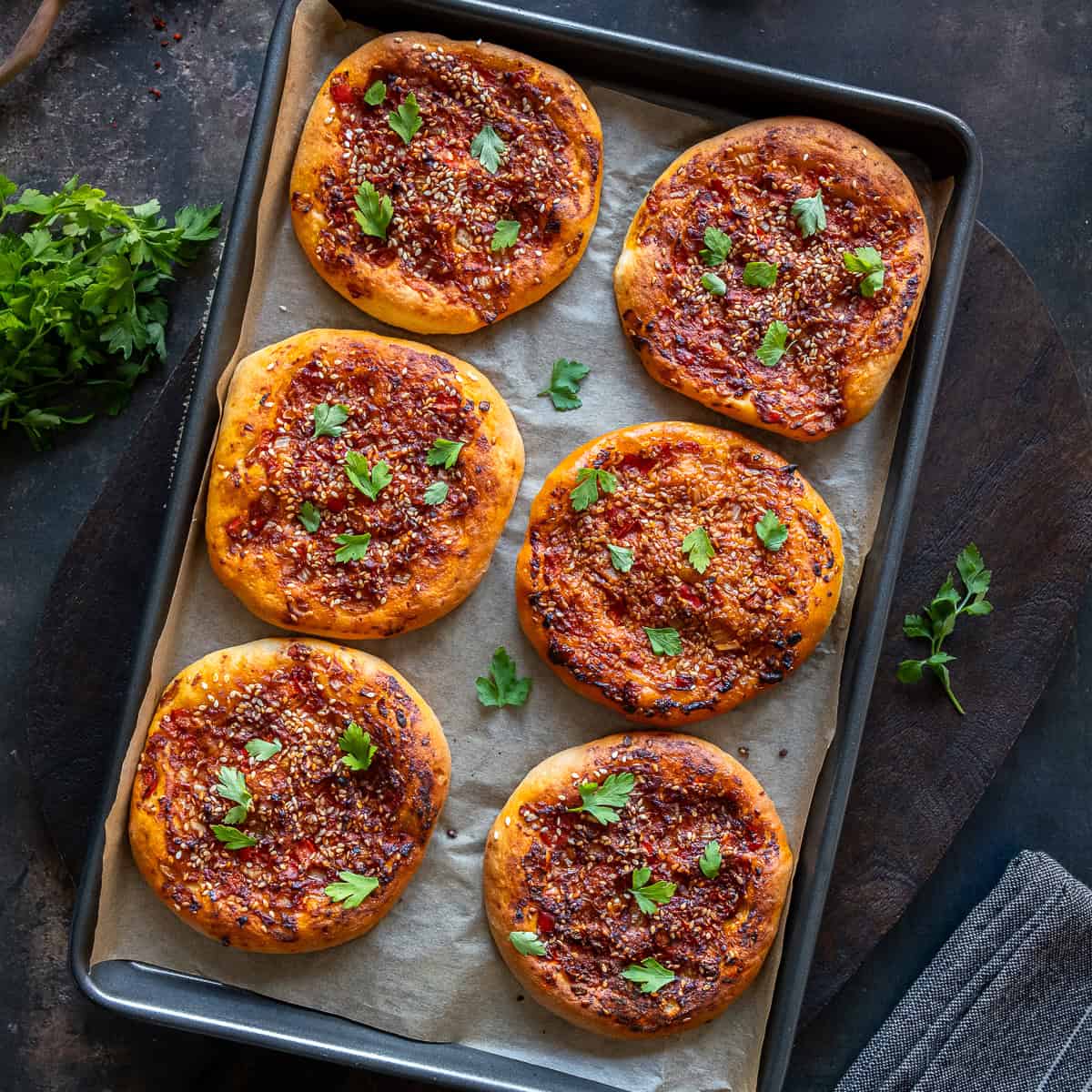
Biberli Ekmek The pepper bread of Zerrin's hometown, and the oldest recipe on the blog giverecipe.com
Biberli ekmek, a Turkish pepper bread, is the oldest recipe in the archive, first posted in February 2009 and rewritten since. Zerrin remembers running home from school hoping her mother had baked it. Yusuf had never heard of it before they got married. "That's how local this pastry is!" she writes. The breads are small rounds of soft yeast dough spread with red pepper paste, tomato paste, onion, Turkish red pepper flakes and olive oil, and they are sold in bakeries and at street stands next to simit. The post explains that the dough is sticky on purpose and needs no kneading, so you mix it with a spatula and shape it with oiled fingers. It also explains the local differences: in Mersin the bread is simply called biberli and has no cheese, while the Hatay version adds a crumbly cheese called çökelek, cumin, nigella seeds and zahter, a local thyme. Leftovers go into their son's lunch box.
Antalya Piyazi (Turkish White Bean Salad with Tahini)
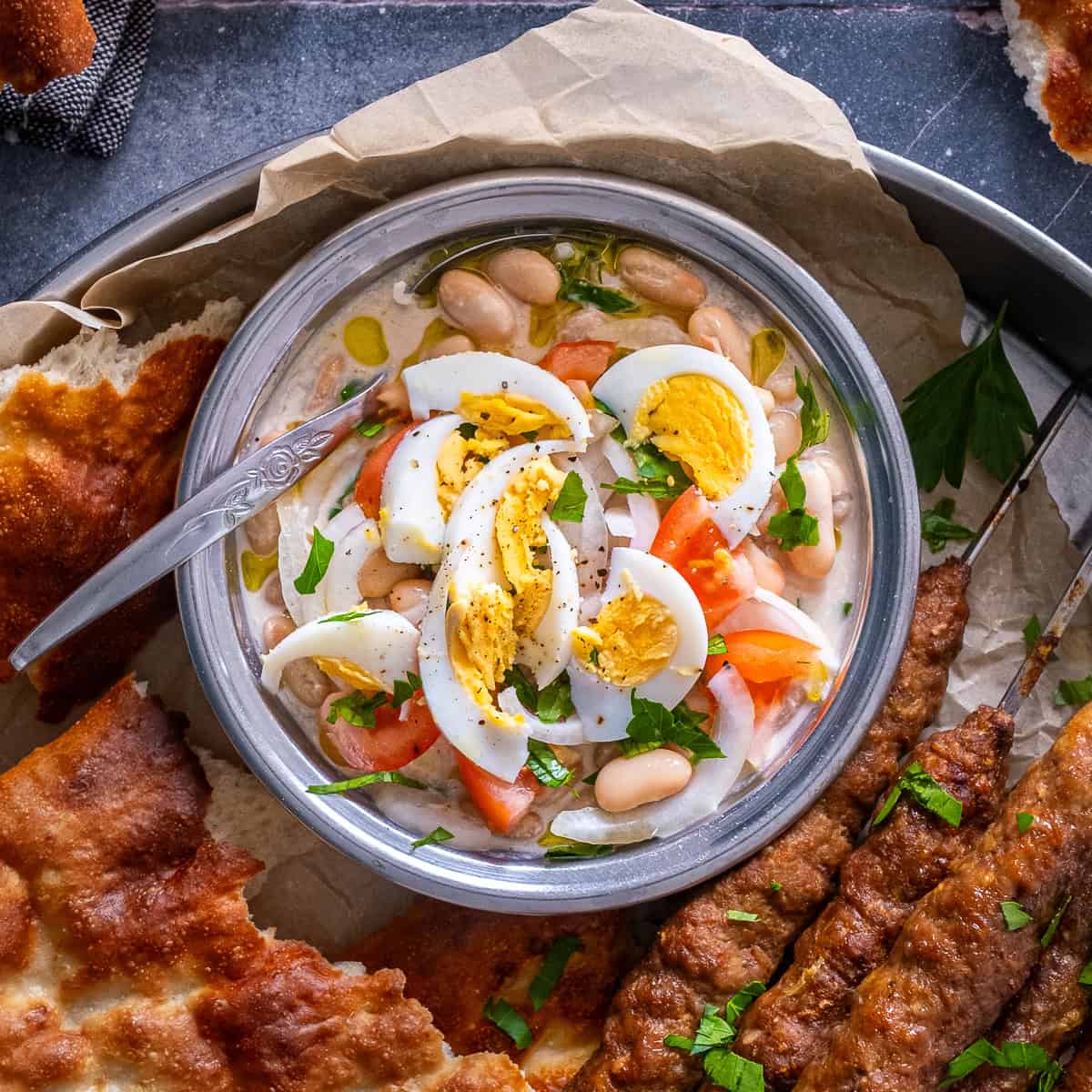
Antalya Piyazi A white bean salad served in a pool of tahini sauce, the way Antalya makes it giverecipe.com
Antalya piyazi is the recipe the Antalya commenters asked for, and it shows what makes the blog useful: it tells you what is traditional and what the couple changed. Antalya cooks use Çandır beans. The couple use canned cannellini beans and hope their friends in Antalya won't be too angry, because "sometimes a shortcut is worth taking." They save some of the liquid from the can and stir it into the sauce, where its starch makes the tahini creamy. They warn you that the sauce will get thick as you stir, which is normal, and tell you to add warm water a little at a time until it pours like runny cream. Grape vinegar is the usual choice in Türkiye, but they prefer red wine vinegar and say so. Then the beans go on a plate with plenty of sauce, sliced onion, tomato, parsley and hard-boiled egg. In Antalya it is served with grilled meatballs, and there is so much sauce that, they say, you might think it is a soup.
Why It Matters
Outside Türkiye, Turkish food is often known only through a kebab shop menu. Give Recipe fills in the rest of the country: the pastries, the salads, the breakfast breads and the dishes one town makes differently from the next. For a home cook, that means learning what a dish is supposed to be where it comes from, and seeing exactly where the couple have adjusted it for a kitchen in the UK.
Their newest post is a quince jam. Relatives in Tarsus used to send them jars of it, and it was always the star of the breakfast table. Now, whenever they see quinces in a shop in the UK, they buy some and make their own, and the smell, they write, takes them "right back to Türkiye." Seventeen years after their first post, Zerrin and Yusuf are still cooking the food they grew up with and writing it down so that anyone can make it too.
Explore Give Recipe: https://www.giverecipe.com
We're featuring exceptional food blogs that bring unique perspectives to cooking and culture. At ChefTalk, we're building a voice-first cooking companion that transforms any recipe into hands-free guidance, action by action. Learn more.